Diplomat Portuguese

Antonio Guterres

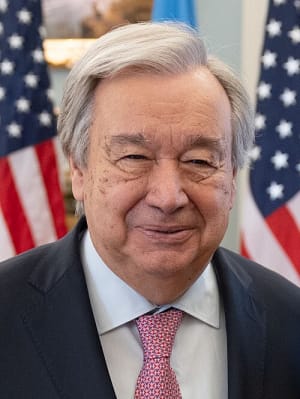
Antonio Guterres is the Secretary-General of the United Nations since 2017. Known for his multilateralist stance, advocacy for Palestinian rights, and persistent calls for diplomatic resolution of Middle East conflicts. Recently, Guterres has urged support for UNRWA, criticized Israeli actions in the West Bank and Golan, and called for de-escalation between Iran and the United States. Last updated 1 day ago
Antonio Guterres

Latest coverage

Global

Who Will Lead the UN? Meet the 8 Candidates to Replace António Guterres

Guterres leaves office on December 31, 2026.

1. Rebeca Grynspan | Costa Rica

Former Costa Rican vice president and current head of UN Trade and Development. A vetera...

Who Will Lead the UN? Meet the 8 Candidates to Replace António Guterres

Guterres leaves office on December 31, 2026.

1. Rebeca Grynspan | Costa Rica

Former Costa Rican vice president and current head of UN Trade and Development. A veteran diplomat of Jewish heritage with extensive UN experience, international connections and strong ties to the UN establishment.

2. Rafael Grossi | Argentina

Director General of the International Atomic Energy Agency (IAEA). Best known for overseeing international nuclear inspections, including Iran’s nuclear program, and negotiating with Tehran.

3. Carolyn Rodrigues Birkett | Guyana

Former foreign minister and ambassador to the UN. An experienced Caribbean diplomat focused on development, international cooperation and the interests of smaller nations. However, she has limited experience managing major international security crises.

4. Lana Nusseibeh | United Arab Emirates

Former UAE ambassador to the UN and minister of state. A diplomat of Palestinian heritage involved in the Abraham Accords era and Gaza diplomacy. The UAE’s close ties with Israel could complicate her support among Arab and Muslim states.

5. Feridun Sinirlioğlu | Turkey

Former Turkish foreign minister and OSCE chief, closely tied to Erdogans foreign policy, has NATO and Middle East experience.

6. María Fernanda Espinosa | Ecuador

Former UN General Assembly president and Ecuadorian foreign minister, associated with Ecuador’s former leftist government and known for her focus on climate policy and multilateral diplomacy.

7. Ivonne A-Baki | Ecuador

Former Ecuadorian ambassador to the U.S., France and Qatar, with strong ties to Washington and the Arab world, particularly Qatar, but limited experience leading major international institutions.

8. Olara Otunnu | Uganda

Former UN Under Secretary General and humanitarian advocate focused on child protection and human rights, with limited recent experience managing major geopolitical crises.

—

Grynspan remains the strongest candidate electorally, with 12 favorable votes in the November 5 informal Security Council ballot. Grossi received 9, Rodrigues Birkett 8 and Nusseibeh 7. None has secured the required consens

Of the 8 candidates, Rafael Grossi of Argentina and Lana Nusseibeh of the UAE appear to be 2 plausible choices for U.S., given their diplomatic relationships and experience.

Grossi has the clearest reported U.S. backing among the declared candidates, but Trump may prefer someone outside the current field.

Nusseibeh’s close relationships with the U.S. could make her another potential contender.

The next Secretary General will require the support of the UN Security Council, including the ability to avoid a veto from any of its 5 permanent members.

Global

So far, most of the UNGA speakers used the podium to sharply criticize Israel, with Gaza and the ‘West Bank’ dominating many of the speeches.

1António Guterres, UN Secretary General: Called Hamas's Oct. 7 attack "abhorrent," then said "wha...

So far, most of the UNGA speakers used the podium to sharply criticize Israel, with Gaza and the ‘West Bank’ dominating many of the speeches.

1António Guterres, UN Secretary General: Called Hamas's Oct. 7 attack "abhorrent," then said "what followed was an onslaught on Palestinians in Gaza with a scale of killing and destruction unlike anything I have witnessed in all my years as secretary general." He warned that Israeli violence, displacement and settlement expansion in the West Bank are "bulldozing the path to peace and raising the spectre of ethnic cleansing."

2Luiz Inácio Lula da Silva, Brazil: Said "generations of Palestinians will carry the pain and trauma left by the genocide of women and children perpetrated by Netanyahu's government in Gaza," while adding that Israeli civilians pay the price for Hamas terrorism. He also attacked efforts to undermine the ICC.

3King Abdullah II, Jordan: Accused Israel of war crimes in Gaza and the West Bank, calling them "two fronts of the same Israeli strategy," with Gaza remade through destruction and the West Bank through "de facto annexation." Said demolishing Palestinian homes for settlements "is not law enforcement; it is forcible transfer."

4Recep Tayyip Erdogan, Turkey: Accused Israel of "state terror," called Gaza "the most inhumane and shameful concentration camp of our time," and said "we are facing a genocidal mindset that is never satisfied with killing." The Israeli delegation walked out.

5Sheikh Tamim bin Hamad Al Thani, Qatar: Called Gaza "genocide in the fullest sense of the word" and "a stain of shame on the conscience of humanity," and said there can be no just international order "as long as Palestine remains a blind spot within it."

6Emmanuel Macron, France: In his final UNGA speech, asked "What is our credibility worth if we remain inactive in the face of Gaza?" and called the situation "a spectacle that shames us all." Also criticized settler violence in the West Bank.

7Andy Burnham, United Kingdom: In his first UNGA speech as prime minister, called Oct. 7 "utterly horrific" and said Britain stands with Israel against threats from Iran, but added "this does not justify the actions of the Israeli government in Gaza or the West Bank." He singled out the E1 settlement plan.

8 Ahmad al Sharaa (Jolani), Syria:
Speaking on the sidelines of UNGA ahead of his address, said "it is not appropriate that what happened on October 7 sets the policy for Syria," arguing Israel's approach "brings more security threats." He said Damascus's relations with the US and the West are working but not with Israel, "so I believe the problem is with Israel, not with Syria." He also revealed that talks with Israel had at one point reached "almost 90%" agreement, and rejected the US recognition of Israeli sovereignty over the Golan.

Leaders

UN Secretary-General Guterres on Palestine-Israel:

I totally refuse the idea of bias. On the contrary, I think we have been on the right side of history.

We have been defending what is necessary for peace to come to the Middle East, and for two peoples to be able to live together, because, I mean, there are two peoples with a few million each one, and there is no way one can destroy the other.

And so it’s probably better to do everything possible to reconcile.

Leaders

UN Chief Antonio Guterres:

I am deeply concerned by the serious escalation & renewed military confrontations in the Gulf, including the Iranian attacks on ships in the Strait of Hormuz, the attacks by the US on Iran, and the attacks by Ira...

UN Chief Antonio Guterres:

I am deeply concerned by the serious escalation & renewed military confrontations in the Gulf, including the Iranian attacks on ships in the Strait of Hormuz, the attacks by the US on Iran, and the attacks by Iran on targets in the neighboring countries.

These attacks must all stop.

A return to full-scale hostilities would have catastrophic consequences – for the peoples of the region, for international peace & security & for the global economy.

I urge Iran & the US to urgently resume negotiations & to address outstanding issues through diplomacy.

Global

Israel Foreign Ministry:

Equating a sovereign UN member state with a jihadist terrorist organization is yet another proof of the UN Secretary-General’s failure.

The UN has failed to disarm Hezbollah and failed to uphold its own Security C...

Israel Foreign Ministry:

Equating a sovereign UN member state with a jihadist terrorist organization is yet another proof of the UN Secretary-General’s failure.

The UN has failed to disarm Hezbollah and failed to uphold its own Security Council Resolution 1701.
Hezbollah is the enemy of both Israel and Lebanon, serving as the Iranian regime’s proxy to dominate Lebanon.

Antonio Guterres should stand firmly behind genuine Israel–Lebanon peace efforts, not offer excuses for Hezbollah.

Leaders

UN chief Antonio Guterres:

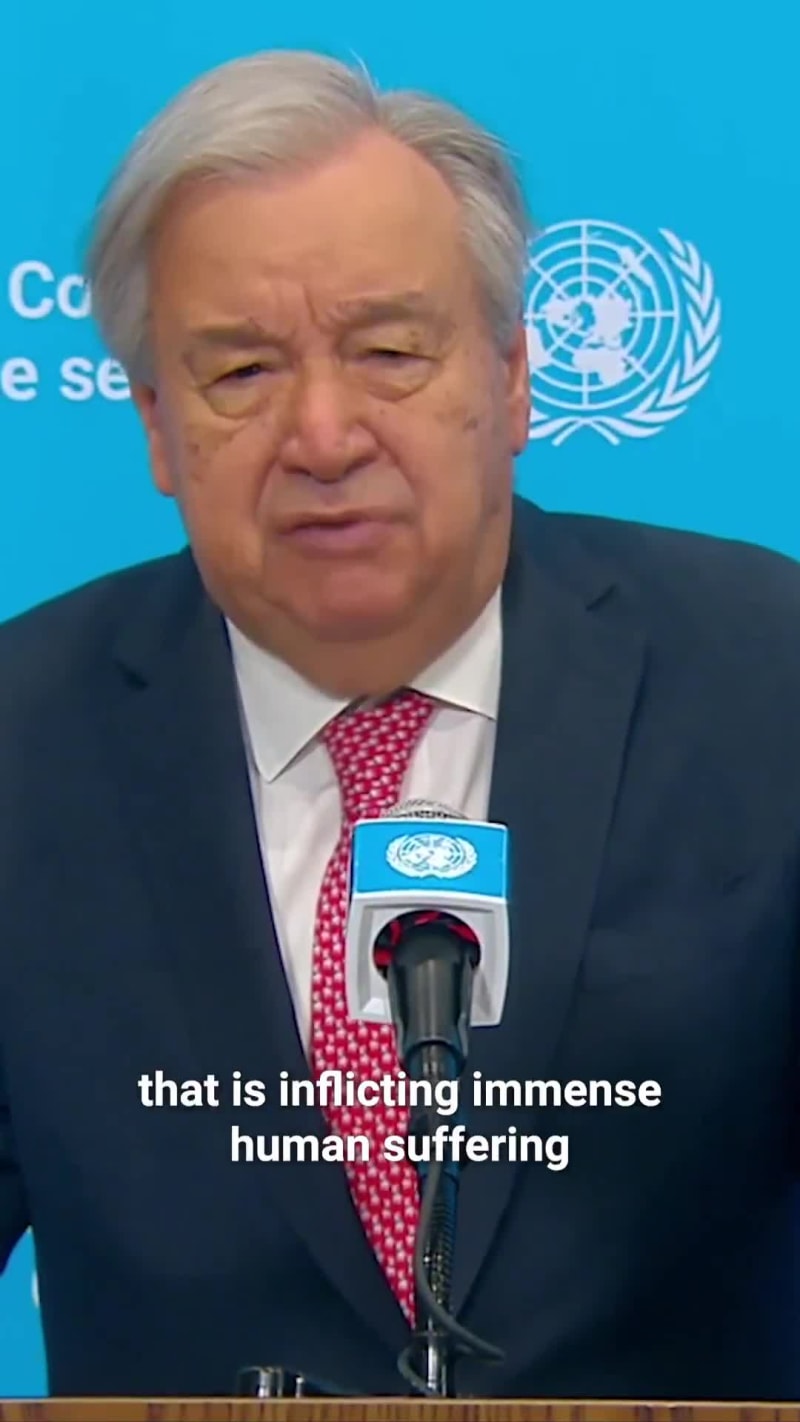
"My message is clear to the United States and Israel. It's high time to stop the war that is inflicting immense human suffering and already triggering devastating economic consequences.

To Iran, to stop attacki...

UN chief Antonio Guterres:

"My message is clear to the United States and Israel. It's high time to stop the war that is inflicting immense human suffering and already triggering devastating economic consequences.

To Iran, to stop attacking their neighbors.
Security Council has condemned these attacks and reaffirmed the need to respect navigational rights and freedoms along critical maritime routes, including the Strait of Hormuz.

Conflicts do not end on their own. They end when leaders choose dialogue over destruction. That choice still exists and must be made now."

Leaders

UN chief António Guterres:

"The conflict in the Middle East has gone too far.

My message to the US & Israel is that it’s high time to end the war – as human suffering deepens, civilian casualties mount & the global economic impact is increasingly devastating.

My message to Iran is to stop attacking their neighbors that are not parties to the conflict."