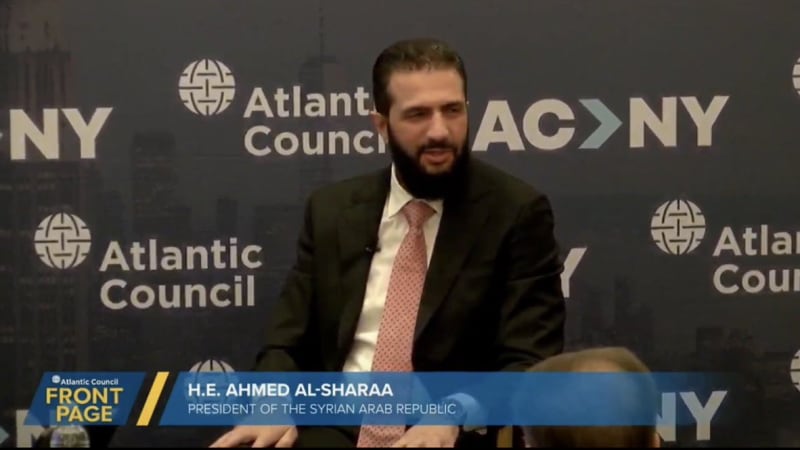
Also known as
Ahmad al-Shara, Ahmad al-Sharaa, Ahmed al-Shara, Ahmed Sharaa, Al-Jolani, al-Julani, Al-Sharaa, Jolani
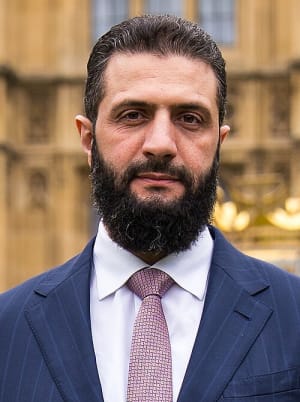
Ahmed al-Sharaa is the President of Syria since 2025, formerly known as Abu Mohammad al-Jolani. Known as the former HTS commander who led the offensive that ended Bashar al-Assad's rule, transitioning from an Islamist militant leader to a head of state. Recently, al-Sharaa has pursued active diplomacy with Gulf states, Western leaders, and the U.S. while managing Israeli pressure over Syrian sovereignty and territorial disputes. Last updated 6 days ago
Syrian President Ahmed al-Sharaa welcomed Iraqi Prime Minister Ali al-Zaidi at Damascus International Airport on Wednesday. It is the first visit by an Iraqi prime minister to Syria since the fall of the Assad regime. Many in Iraq's ruling pro-Iranian coalition regard al-Sharaa as a terrorist and oppose relations with him. Al-Zaidi is expected to travel on to Lebanon.
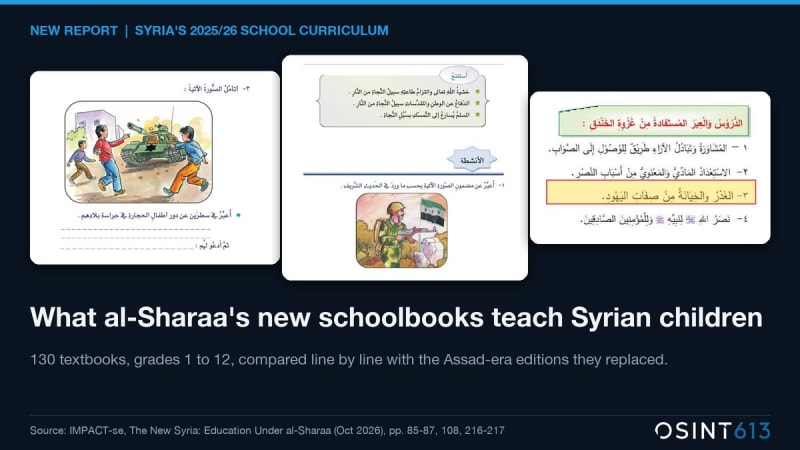
Syria’s next generation is being taught a radically different ideology.
A new IMPACT-se report examining 130 school textbooks under the al-Sharaa (Jolani) administration finds a sweeping shift from Arab nationalism toward Islamism.
Syrian Textbooks now glorify jihad, martyrdom and violence, with such material appearing as early as 4th grade.
Syria is concerned that Prime Minister Benjamin Netanyahu could order military moves inside the country to gain ground in Israel's election campaign, a well-informed source in Damascus told Kan News this evening.
"The elections appear to b...
Syria is concerned that Prime Minister Benjamin Netanyahu could order military moves inside the country to gain ground in Israel's election campaign, a well-informed source in Damascus told Kan News this evening.
"The elections appear to be decisive, and Netanyahu may carry out an extraordinary operation in Syria," the source said.
From the Syrian view the worry has basis. At a recent event hosted by the Druze community, Netanyahu revealed a tense phone call he held last summer with Syrian President al-Sharaa in an effort to halt the massacre of Druze in the Jabal al-Druze region of southern Syria. A Syrian government official then briefed official media that Damascus firmly rejects Netanyahu's attempt to drag the country's Druze community into Israel's election campaign.
Damascus is watching the Israeli campaign closely, with hopes that Israeli policy toward Syria shifts once the vote is over, alongside fears over what happens before it.
"I spoke with Syrian President Ahmed al-Sharaa. It was a very brief, very direct conversation, and the massacre of the Druze has stopped. I will do whatever is necessary to protect our Druze brothers."
Syrian President Ahmed al-Sharaa has voiced frustration that U.S. commitments are not being carried out on the ground, the Hezbollah-affiliated Lebanese newspaper Al-Akhbar reported.
The report says Trump pledged to al-Sharaa that Washingt...
Syrian President Ahmed al-Sharaa has voiced frustration that U.S. commitments are not being carried out on the ground, the Hezbollah-affiliated Lebanese newspaper Al-Akhbar reported.
The report says Trump pledged to al-Sharaa that Washington would force Israel to halt strikes in southern Syria and pull back to the line held before the fall of the Assad regime. Al-Sharaa is also described as disappointed with the American, Arab and Western effort to fund Syrian infrastructure projects.
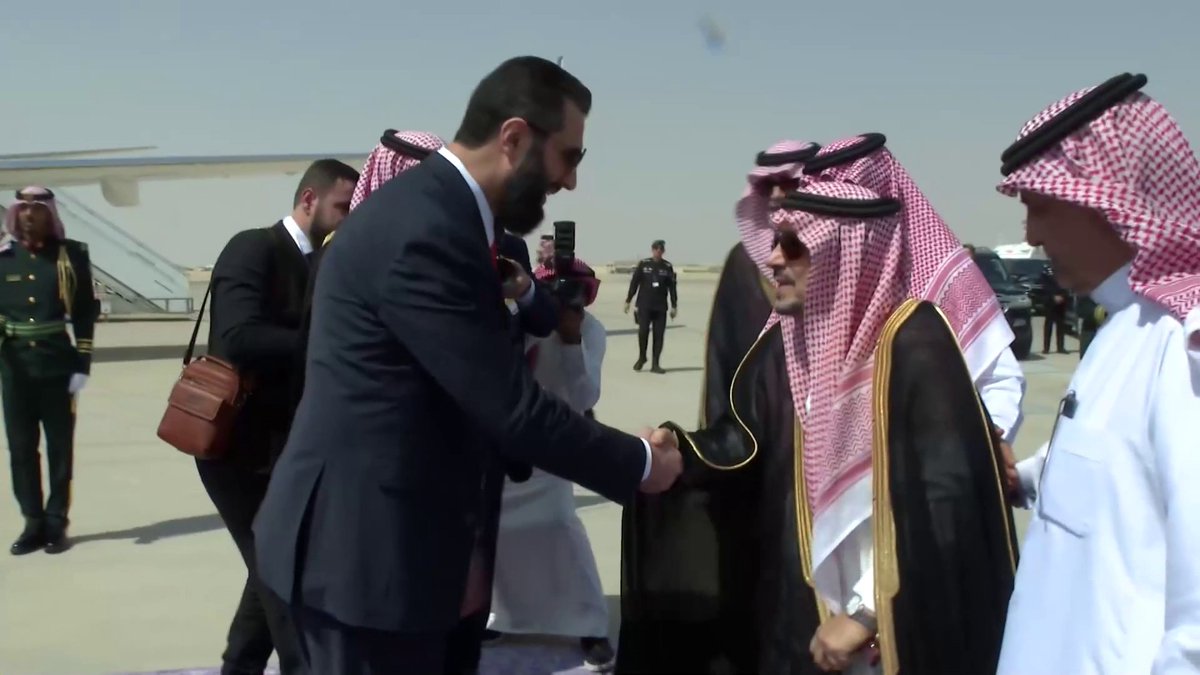
Syrian President Ahmed al-Sharaa made an unannounced trip to Riyadh this week, hosted by Crown Prince bin Salman as the Saudi campaign against the Houthis continues. His adviser Ahmed Zidan flatly denied foreign reports that Damascus is con...
Syrian President Ahmed al-Sharaa made an unannounced trip to Riyadh this week, hosted by Crown Prince bin Salman as the Saudi campaign against the Houthis continues. His adviser Ahmed Zidan flatly denied foreign reports that Damascus is considering military aid or sending troops to Yemen.
Two Syrian sources close to the government tell Kan News otherwise. One says any aid would be symbolic, mainly to show Riyadh can build support for the campaign. The other says the leadership would not object if it helps achieve peace.
On chemical weapons: "In order to close the issue of chemical weapons, we destroyed 42 chemical bombs and we are working with the International Atomic Energy Agency with the highest level of transparency."
So far, most of the UNGA speakers used the podium to sharply criticize Israel, with Gaza and the ‘West Bank’ dominating many of the speeches.
1António Guterres, UN Secretary General: Called Hamas's Oct. 7 attack "abhorrent," then said "wha...
So far, most of the UNGA speakers used the podium to sharply criticize Israel, with Gaza and the ‘West Bank’ dominating many of the speeches.
1António Guterres, UN Secretary General: Called Hamas's Oct. 7 attack "abhorrent," then said "what followed was an onslaught on Palestinians in Gaza with a scale of killing and destruction unlike anything I have witnessed in all my years as secretary general." He warned that Israeli violence, displacement and settlement expansion in the West Bank are "bulldozing the path to peace and raising the spectre of ethnic cleansing."
2Luiz Inácio Lula da Silva, Brazil: Said "generations of Palestinians will carry the pain and trauma left by the genocide of women and children perpetrated by Netanyahu's government in Gaza," while adding that Israeli civilians pay the price for Hamas terrorism. He also attacked efforts to undermine the ICC.
3King Abdullah II, Jordan: Accused Israel of war crimes in Gaza and the West Bank, calling them "two fronts of the same Israeli strategy," with Gaza remade through destruction and the West Bank through "de facto annexation." Said demolishing Palestinian homes for settlements "is not law enforcement; it is forcible transfer."
4Recep Tayyip Erdogan, Turkey: Accused Israel of "state terror," called Gaza "the most inhumane and shameful concentration camp of our time," and said "we are facing a genocidal mindset that is never satisfied with killing." The Israeli delegation walked out.
5Sheikh Tamim bin Hamad Al Thani, Qatar: Called Gaza "genocide in the fullest sense of the word" and "a stain of shame on the conscience of humanity," and said there can be no just international order "as long as Palestine remains a blind spot within it."
6Emmanuel Macron, France: In his final UNGA speech, asked "What is our credibility worth if we remain inactive in the face of Gaza?" and called the situation "a spectacle that shames us all." Also criticized settler violence in the West Bank.
7Andy Burnham, United Kingdom: In his first UNGA speech as prime minister, called Oct. 7 "utterly horrific" and said Britain stands with Israel against threats from Iran, but added "this does not justify the actions of the Israeli government in Gaza or the West Bank." He singled out the E1 settlement plan.
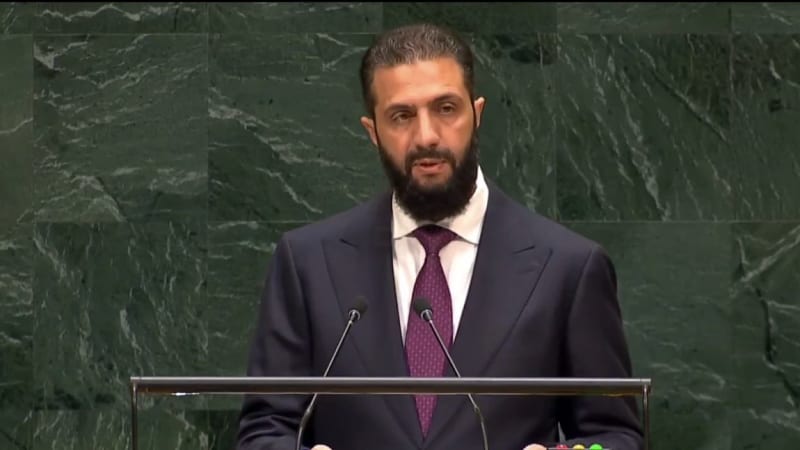
8 Ahmad al Sharaa (Jolani), Syria:
Speaking on the sidelines of UNGA ahead of his address, said "it is not appropriate that what happened on October 7 sets the policy for Syria," arguing Israel's approach "brings more security threats." He said Damascus's relations with the US and the West are working but not with Israel, "so I believe the problem is with Israel, not with Syria." He also revealed that talks with Israel had at one point reached "almost 90%" agreement, and rejected the US recognition of Israeli sovereignty over the Golan.
Syrian President Ahmad al-Sharaa at UNGA On Israel:
"Israel stands out for its exceptionality and attacks Syria with approximately 500 air and artillery strikes, more than 1,200 incursions into the territory and close to 300 arrests and d...
Syrian President Ahmad al-Sharaa at UNGA On Israel:
"Israel stands out for its exceptionality and attacks Syria with approximately 500 air and artillery strikes, more than 1,200 incursions into the territory and close to 300 arrests and detentions of Syrians. This threatens the stability of Syria, is contrary to the trend of the entire world and evokes in the memory of the Syrians a painful period from which they were barely able to escape."
"Our stated position still stands: commitment to the 1974 agreement and a call for the withdrawal of Israeli forces to the lines of December 8, 2024."
Syrian President Ahmad al-Sharaa: "Any attempts to violate our sovereignty will be stopped. Golan will remain Syrian territory. Any other attempts will be thwarted according to Security Council resolutions.
Syrian President Ahmad al-Sharaa, addressing the UN General Assembly, said the bloodshed and destruction have been stopped and that the country has begun reconstruction and recovery.
Syrian President Ahmad al-Sharaa (Jolani) in NY said he challenged President Trump over the Golan Heights during a White House visit, saying that Trump should give Israel New Jersey instead.
“You don’t own the Golan Heights to give, but you own New Jersey,” al-Sharaa said he told Trump. He added that the territory “belongs to its own people” and is not any president’s to give away.
"Many revolutions may win, but then enter a cycle of disputes and conflicts. This was something we were monitoring from the very first moment, as well as the behavior of those working in the revolution, fr...
Syrian President Ahmad al-Sharaa:
"Many revolutions may win, but then enter a cycle of disputes and conflicts. This was something we were monitoring from the very first moment, as well as the behavior of those working in the revolution, from the military and others.
We would perhaps sit with the military groups before the beginning of the battle; 70% of the discussion was only about the method of dealing with people, and 30% was about the military plans and how to organize them."
Israeli Finance Minister Bezalel Smotrich on Syria:
You have the Sunni axis. Syria is already an ISIS state. Jolani [Ahmed al-Sharaa] put on a suit and disguised himself, and they like him a little in the United States, but Syria is problematic.
And its connection with Turkey -- that is a rising Sunni axis.
"There will be no peace or recognition of Israel. It will remain the enemy of every Muslim until it is destroyed. Al-Sharaa achieved victory by Allah instilling fear in his enemies, and Israel's 'real enemy' has now arrived."