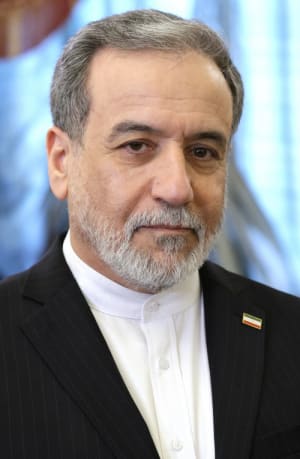
Minister / Cabinet Member Iran

Abbas Araghchi

Also known as Abbas Araqchi, Aragchi, Araghchi, Araqchi

Abbas Araghchi is Iran's Minister of Foreign Affairs. Known for his career as a veteran diplomat and nuclear negotiator, representing Iran in multilateral talks. Recently, Araghchi has led indirect diplomacy with the U.S. via mediators, managed Strait of Hormuz negotiations, and coordinated regional outreach amid military tensions. Last updated 6 days ago
Abbas Araghchi

Latest coverage

Leaders

Iran’s Foreign Minister Abbas Araghchi:

If states were free to attack one another based on their own assessments of possible future threats, what would be left of the international legal order?

This is about more than Iran.

What is ultimately at stake is the credibility of an international legal order designed to prevent states from resorting to force at will.

If power is permitted to prevail over law, Iran will not be the only casualty.

Leaders

Iran’s Foreign Minister Abbas Araghchi:

8 years ago a cartoon character like Pompeo said Iranians must follow White House diktat “if they want to eat”. Today, Rubio—whose fellow Cubans are victims of same policy—repeats that drivel.

Forget about the inhumanity. It's the delusions that are producing failed U.S. policy

Global

Iranian Foreign Minister Abbas Araghchi has asked the United Nations and the International Atomic Energy Agency to condemn a U.S. State Department offer of up to $20 million for information on Iran's nuclear program. In a letter to the UN Secretary-General, the Security Council president and the IAEA Director-General, he described the statement as "hateful and regrettable," according to Iranian reports.

Global

Iranian Foreign Minister Abbas Araghchi:

In my interview with Al Jazeera network, I affirmed that we harbor no hostility toward the countries of the Gulf Cooperation Council, and we appreciate the positive role played by Qatar and Oman, and we continue the dialogue with Saudi Arabia. Our goal is to reach new regional security arrangements carried out by the countries of the region themselves, away from any foreign military presence.

Global

Iran’s Foreign Minister Abbas Araghchi:

Three countries in the region signed the Mecca Agreement together.

But they did not visit Tehran as members of that agreement.

They visited as three major regional countries seeking consultations with another major country.

I believe this was a very good beginning. Their approach was extremely positive and constructive.

We agreed to continue these talks at different levels among the four countries.

Leaders

Iranian Foreign Minister Abbas Araghchi on claims of rifts inside the leadership:

"I can tell you, as someone who attends private meetings, that there is a consensus among all of us: the government, parliament, the Supreme National Securit...

Iranian Foreign Minister Abbas Araghchi on claims of rifts inside the leadership:

"I can tell you, as someone who attends private meetings, that there is a consensus among all of us: the government, parliament, the Supreme National Security Council and the armed forces."

Officials argue matters out among themselves in meetings. Once a decision is made, all of them back it and work to carry it out.

Araghchi accused Washington of misreading the Islamic Republic, the Iranian people, Iranian officials and the system that governs Iran.

"They imagine that there are divisions between individuals. That is certainly a mistaken assumption."

Iran's chief negotiator is still Dr. Ghalibaf, and Mohsen Rezaei fully supports him.

Leaders

Iranian Foreign Minister Araghchi:

"The process is progressing and the consultations are ongoing, but we have not yet reached a final result."

"The mission of the armed forces is completely clear. They are much stronger than they were in ...

Iranian Foreign Minister Araghchi:

"The process is progressing and the consultations are ongoing, but we have not yet reached a final result."

"The mission of the armed forces is completely clear. They are much stronger than they were in the two previous wars, considering the lessons and experience they gained in them."

"We are fully prepared for defense, and at the same time ready for diplomacy. The question of which path the Americans will choose depends on their wisdom."

Global

Rezaei on the U.S.-Iran negotiation track:

"The second offer was better than the first offer, but an explicit message was passed to them. Iranian Foreign Minister Araghchi told them: 'Iran is suspicious of you. You want to negotiate, and t...

Rezaei on the U.S.-Iran negotiation track:

"The second offer was better than the first offer, but an explicit message was passed to them. Iranian Foreign Minister Araghchi told them: 'Iran is suspicious of you. You want to negotiate, and then attack after the elections.' After we said this, their third response reached us, and it was much better than the previous ones. It made clear that the Americans are ready to accept your seven conditions. After that, we still had a few unclear points. Yesterday these answers were passed to Araghchi, and discussions in this new round began."

Leaders

Economic pressure on Iran is real and Tehran does not deny it, but the country will not surrender, Foreign Minister Abbas Araghchi told Al Jazeera on Saturday.

Tehran has studied a letter from U.S. Vice President JD Vance, Al Jazeera reported.

Araghchi dismissed talk of any meeting with U.S. officials as media speculation, adding that Iran has no such plans.

Leaders

Iranian Foreign Minister Abbas Araghchi:

"The reality is that Iran, simply by virtue of geography, will always have unparalleled leverage over maritime traffic through the Strait of Hormuz.

Despite the hype about alternative routes, the w...

Iranian Foreign Minister Abbas Araghchi:

"The reality is that Iran, simply by virtue of geography, will always have unparalleled leverage over maritime traffic through the Strait of Hormuz.

Despite the hype about alternative routes, the waterway is irreplaceable for both the region and the world economy.

The good news is that Iran intends to honor its historic role as a guardian of the Strait and those who lawfully traverse it.

There is a way forward, but it can only materialize once the US administration genuinely accepts that it has no military options."