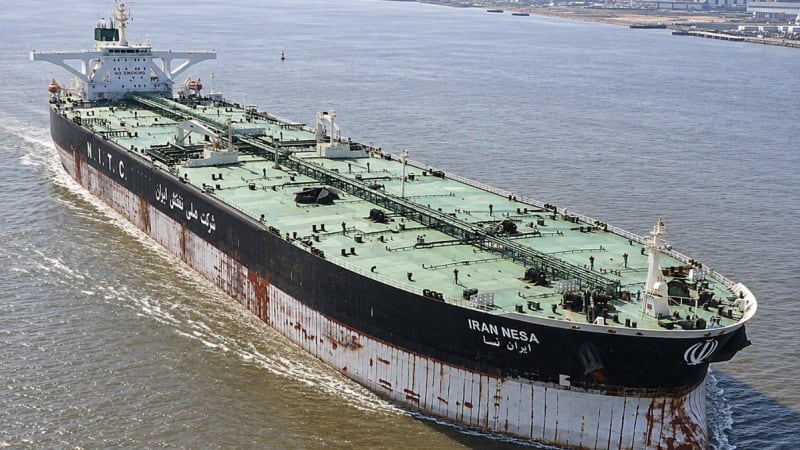
Kharg Island is a strategic island in the Persian Gulf, located in Bushehr County, Iran. Known as Iran's primary oil export terminal, handling approximately 90% of the country's crude exports, making it a critical node in global energy markets and a longstanding pressure point in U.S.-Iran tensions. Recently, the island has sustained U.S. military strikes, a naval blockade disrupting crude loading operations, and faces ongoing threats of seizure. Last updated 17 hours ago
The U.S. naval blockade appears to have halted Iran's crude exports, the FT reports.
No tankers have loaded at Kharg Island, Iran's main oil export terminal, for about a week, the longest disruption since the war began. Satellite and shipp...
The U.S. naval blockade appears to have halted Iran's crude exports, the FT reports.
No tankers have loaded at Kharg Island, Iran's main oil export terminal, for about a week, the longest disruption since the war began. Satellite and shipping data show loading berths sitting empty and tanker traffic largely at a standstill.
Iran is still receiving revenue from oil shipped before the blockade, but those cargoes are running out.
Rather than filling storage tanks, Tehran appears to be cutting oil production to avoid exceeding storage capacity.
Iran’s Communications Minister says U.S. strikes repeatedly severed communications between mainland Iran and the islands of Kharg and Qeshm by damaging fiber optic infrastructure in southern Iran.
Authorities temporarily switched to radio and satellite links while repairs were underway.
CENTCOM disabled the Curacao-flagged tanker M/T Belma on July 15 as it sailed toward Iran's Kharg Island in the Arabian Gulf. The empty vessel ignored multiple warnings, and a U.S. aircraft fired Hellfire missiles into its smokestack. The blockade resumed July 14 at 4 p.m. ET. In the first 24 hours, two compliant vessels were redirected and one non-compliant vessel disabled.
President Trump: "We already hit Kharg Island as you know twice... as far as taking it is concerned, if we degrade them far enough and deep enough back, I would do that."
Trump says strikes are sparing major infrastructure like bridges for now, but electricity and water facilities could be targeted next. He also raised the possibility of a U.S. occupation of Kharg Island.