


Yemeni Government forces withdrew from Mocha early Thursday, leaving the Houthis with a Red Sea port roughly 50 miles north of Bab al Mandeb. A day earlier, Saudi backed commanders were reporting major breakthroughs across Yemen’s northern and central desert, where Houthi units had pulled back and government forces moved into abandoned positions.
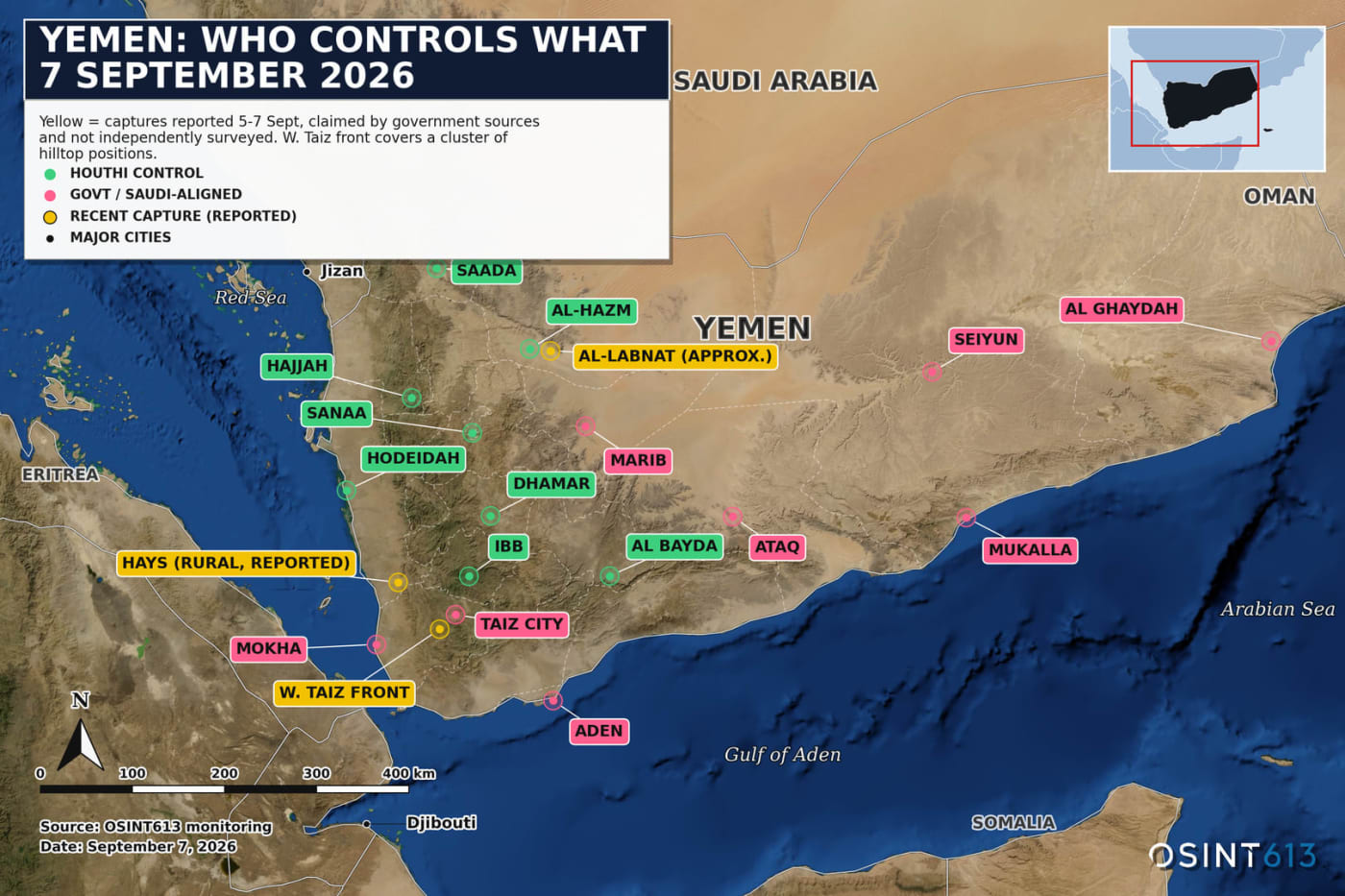
The Houthi movement toward the coast ran through Hays, al Khawkhah, al Waziyah and Mawza while government aligned forces were reporting gains hundreds of miles inland. Reporting from Yemen quoted a former Yemeni military official describing the coastal losses as “really bad,” saying the attention being given to the government advance in the interior hid what was happening along the Red Sea.
What looked Wednesday like a Houthi retreat now looks closer to a repositioning. The Houthis surrendered open territory where Saudi airpower has an advantage and concentrated farther west. By Thursday morning, the government had more desert and the Houthis had Mocha.
MOCHA AND BAB AL MANDEB
Mocha sits on the approaches to Bab al Mandeb, the strait connecting the Red Sea with the Gulf of Aden and Arabian Sea. Ships traveling between Asia and Europe through the Suez Canal pass through the corridor just south of the port.
The Houthis already controlled much of Yemen’s Red Sea coastline farther north, including Hodeidah. Mocha pushes their coastal position farther south and closer to the strait. It does not put Bab al Mandeb under Houthi control, but missiles and drones operating from territory around Mocha have considerably less distance to cover to reach shipping lanes approaching the strait.
The Houthis have already used anti ship missiles, ballistic missiles, cruise missiles and drones against vessels around Yemen and the Red Sea. In late July, they declared a naval blockade targeting Saudi shipping. They now hold additional coastline much closer to the route those ships have to use.
WHAT THE SAUDI BACKED FORCES ACTUALLY GAINED
Saudi backed Yemeni forces announced significant advances Wednesday across the northern and central fronts, including around Taiz, al Bayda and al Jawf. Al Jawf is important because routes from the governorate lead toward Sanaa, and a sustained government advance there would put pressure on Houthi defenses protecting the capital.
Fighting also continued around Marib, where Yemeni government media accused Houthi artillery of killing 3 children, including a baby. Government forces have taken territory during the current offensive, and the gains inland should not be dismissed simply because of what happened farther west.

The problem is the territory the Houthis chose to abandon compared with the territory they took. Much of the government advance has been through exposed inland terrain. On the western front, government forces lost a port, coastline and positions overlooking the approaches to one of the busiest maritime corridors in the world.
THE WAR IS BACK INSIDE SAUDI ARABIA
On September 7 and 8, the Houthis launched a large ballistic missile and drone barrage into southern Saudi Arabia, targeting Abha, Khamis Mushait, Jazan and Najran. The Houthis said their targets included King Khalid Air Base, Aramco infrastructure and industrial facilities around Jazan. Saudi authorities reported fires and temporary disruptions at energy facilities and said 73 civilians were wounded, including women and children.

Houthi military spokesman Yahya Saree said attacks against Saudi “economic arteries” would continue until military operations inside Yemen stop and restrictions on Houthi controlled ports and airports are lifted. The Houthis said the barrage was also retaliation for Saudi and Yemeni operations inside Yemen, including a strike they claim hit a prison in al Jawf.
Saudi Arabia and its Yemeni allies responded with air operations across several governorates. The Houthis claimed 32 strikes during one overnight period and another 54 during a later 12 hour period across Taiz, Hodeidah, al Jawf, Marib, Saada and al Bayda. The strike counts come from the Houthis and have not been independently confirmed, although the Saudi backed side has confirmed extensive operations against Houthi positions.
The fighting is therefore no longer confined to who controls towns and desert roads inside Yemen. The Houthis are putting Saudi energy infrastructure and military installations back into the target set while fighting government forces across several Yemeni fronts.
HORMUZ AND BAB AL MANDEB
The timing of the Mocha loss makes the coastline more important. The U.S. war with the Islamic regime is already putting pressure on the Strait of Hormuz, while attacks and threats against regional energy infrastructure have helped push Brent crude above $100.

Hormuz carries a large share of Gulf oil and LNG exports. Bab al Mandeb is the southern entrance to the Red Sea for vessels heading toward Suez. Iran sits above the first chokepoint, while the Houthis have spent years building the missile and drone capability to reach traffic around the second.
Until this week, the main Houthi position on Yemen’s Red Sea coast was centered much farther north around Hodeidah. The capture of Mocha moves that footprint south toward Bab al Mandeb at the same time the Houthis are again firing missiles and drones into Saudi Arabia.
A former Yemeni military official quoted in reporting on the fighting argued that reversing the coastal losses would require much deeper Saudi involvement and activation of the Mecca Accord, potentially bringing Turkey and Pakistan further into the fight. There is no sign at this stage that Saudi Arabia has activated such an arrangement.
There has also been no major independently confirmed Houthi attack against Israel or commercial shipping during this 72 hour period. Most of the Houthi effort has been directed at Saudi Arabia and the Yemeni battlefield, particularly the western coast.
The immediate question is where the coastal offensive stops. If Mocha is consolidated and Houthi forces continue south, the next stretch of coastline takes them toward Bab al Mandeb itself, while Saudi backed forces will have to decide how much of their inland offensive they are willing to redirect west to stop them.


Read by the author, not published.